Reducing the weight of components and vehicles offers numerous advantages. Lower weight leads to reduced energy consumption, lower emissions, and improved resource efficiency. In the field of electric mobility, lightweight engineering also enables greater driving range and enhanced vehicle performance. At the same time, requirements for component safety and load-bearing capacity continue to increase. The challenge lies in developing lighter components without compromising strength, durability, or service life.
What Are the Requirements of Lightweight Engineering?
Lightweight engineering projects must meet a wide range of technical and economic requirements. Success depends on the optimal combination of material selection, component design, and manufacturing technology.
High Strength with Reduced Weight
One of the primary objectives of lightweight engineering is to reduce the weight of a component while maintaining or even improving its mechanical performance. To achieve this, manufacturers increasingly rely on high-strength and ultra-high-strength materials that can withstand significant loads despite reduced material thickness.
Safety and Crash Performance
Particularly in the automotive industry, components must meet strict safety requirements. Structural parts are designed to absorb impact energy in a controlled manner and protect occupants in the event of a collision. As a result, lightweight engineering is not simply about using less material, but about placing material strategically where it delivers the greatest benefit.
Cost-Effective Mass Production
In addition to technical performance, economic efficiency plays a crucial role. Lightweight solutions must be compatible with existing manufacturing processes and remain cost-effective even in high-volume production environments.
High Dimensional Accuracy and Process Reliability
As material strength increases, manufacturing processes become more demanding. Consistent quality, tight tolerances, and stable production conditions are essential for the successful implementation of lightweight engineering concepts. Reliable and repeatable processes ensure that lightweight components meet both performance and quality requirements throughout series production.
How Can Lightweight Engineering Requirements Be Achieved?
The implementation of modern lightweight engineering concepts is based on a combination of technological approaches that are often used together to maximize performance, efficiency, and manufacturability.
Use of High-Strength Materials
High-strength and ultra-high-strength steels make it possible to design components with reduced material thickness without compromising structural integrity. As a result, significant weight savings can be achieved while still meeting demanding safety and performance requirements. These advanced materials play a key role in many modern lightweight engineering applications, particularly where strength-to-weight ratio is critical.
Optimized Component Design
Advanced simulation and engineering methods enable components to be designed according to their specific load requirements. Material is strategically placed where it is needed most, while unnecessary mass is systematically eliminated. This approach ensures efficient material utilization and contributes to improved overall component performance, durability, and resource efficiency.
Innovative Forming Technologies
The choice of manufacturing technology has a significant impact on the feasibility of lightweight engineering concepts. Conventional forming methods often reach their limits when processing high-strength materials. Modern forming technologies overcome these challenges and open up new possibilities for the production of lightweight yet highly durable components. By enabling complex geometries and optimized material properties, these processes play a crucial role in achieving demanding lightweight engineering targets.
The Role of Hot Forming in Lightweight Engineering
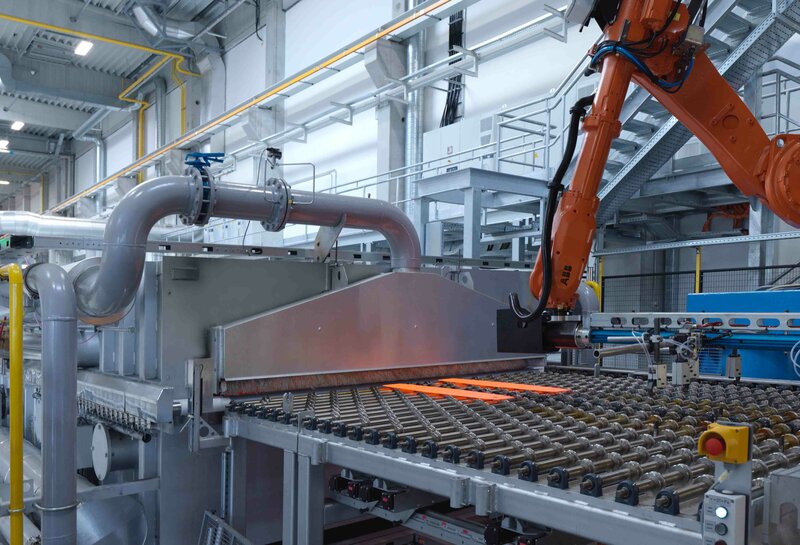
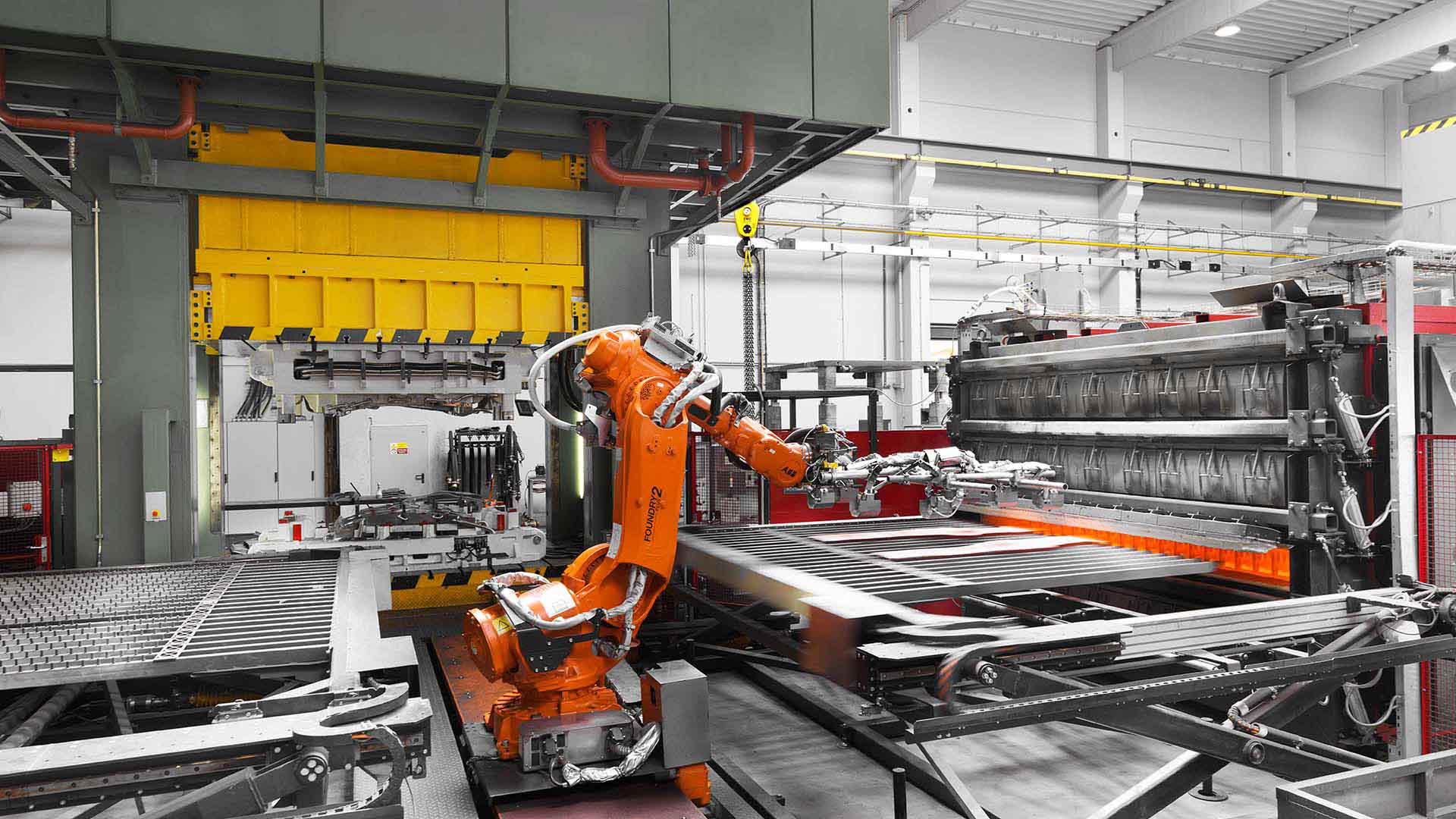
Today, hot forming is considered one of the most important manufacturing technologies for producing highly durable lightweight components. In this process, steel sheets are heated to high temperatures before being formed in a tool. During forming, the material is simultaneously quenched, resulting in components with exceptionally high strength properties.
Advantages of Hot Forming
Hot forming offers several key advantages:
- exceptionally high component strength
- reduced material thickness while maintaining performance
- outstanding crash resistance
- the ability to produce complex component geometries
- high dimensional accuracy
- cost-effective mass production
These benefits make it possible to develop components that are both lightweight and highly resilient, meeting the demanding requirements of modern industries.
Hot Forming as a Key Technology for Future Mobility Concepts
As electrification advances and demands for energy efficiency continue to increase, the importance of hot forming is expected to grow further. The technology enables the production of structural and safety-critical components that successfully balance two often conflicting objectives: minimizing weight while maximizing strength and safety. By combining lightweight design principles with outstanding mechanical performance, hot forming has become a key enabler for next-generation mobility solutions and sustainable vehicle development.
Lightweight Engineering as a Key Success Factor for Modern Products
Today, lightweight engineering is an essential element of modern product development. The combination of advanced materials, intelligent design, and innovative manufacturing technologies enables significant weight reductions while maintaining high levels of performance, safety, and durability. Companies that invest in lightweight engineering concepts at an early stage create the foundation for more efficient products, sustainable production processes, and long-term competitive advantages. As industries continue to face increasing demands for resource efficiency, emission reduction, and performance optimization, lightweight engineering will remain a critical driver of innovation across a wide range of applications.
How weba Supports the Implementation of Lightweight Engineering Projects
As a specialist in toolmaking, forming technology, and series production, weba supports customers in the development and implementation of demanding lightweight engineering solutions. Particular expertise lies in the processing of high-strength and ultra-high-strength steels, the development of hot forming tool solutions, and the reliable series production of complex components. By combining engineering expertise, toolmaking know-how, and digital process monitoring, weba supports projects throughout the entire value chain—from component development and process design to tool manufacturing and serial production. This integrated approach helps ensure that lightweight engineering concepts can be implemented efficiently, economically, and with a high level of process reliability.